Author: demetrioguzzardi

  • Silica in Alberta: The Hidden Hazard Across Seven Key Industries — and Why Employers Must Act Now

    Silica in Alberta: The Hidden Hazard Across Seven Key Industries — and Why Employers Must Act Now

    Silica: Alberta’s Most Persistent — and Most Misunderstood Workplace Hazard
    Crystalline silica has long been part of Alberta’s industrial landscape, but the risk profile has shifted dramatically. New materials, new work practices, and new scientific evidence have transformed silica from a “traditional construction dust” into a whole body occupational toxin linked to lung disease, autoimmune disorders, kidney damage, and even cardiovascular impacts.
    Across the province, exposures are rising in sectors that historically received little attention. At the same time, regulatory expectations are tightening, and employers are being asked to demonstrate real, measurable control of silica hazards.
    This article outlines the seven Alberta industries where silica exposure is most significant today — and why employers must act now.

    1. Construction & Demolition: Short‑Duration, High‑Intensity Exposures

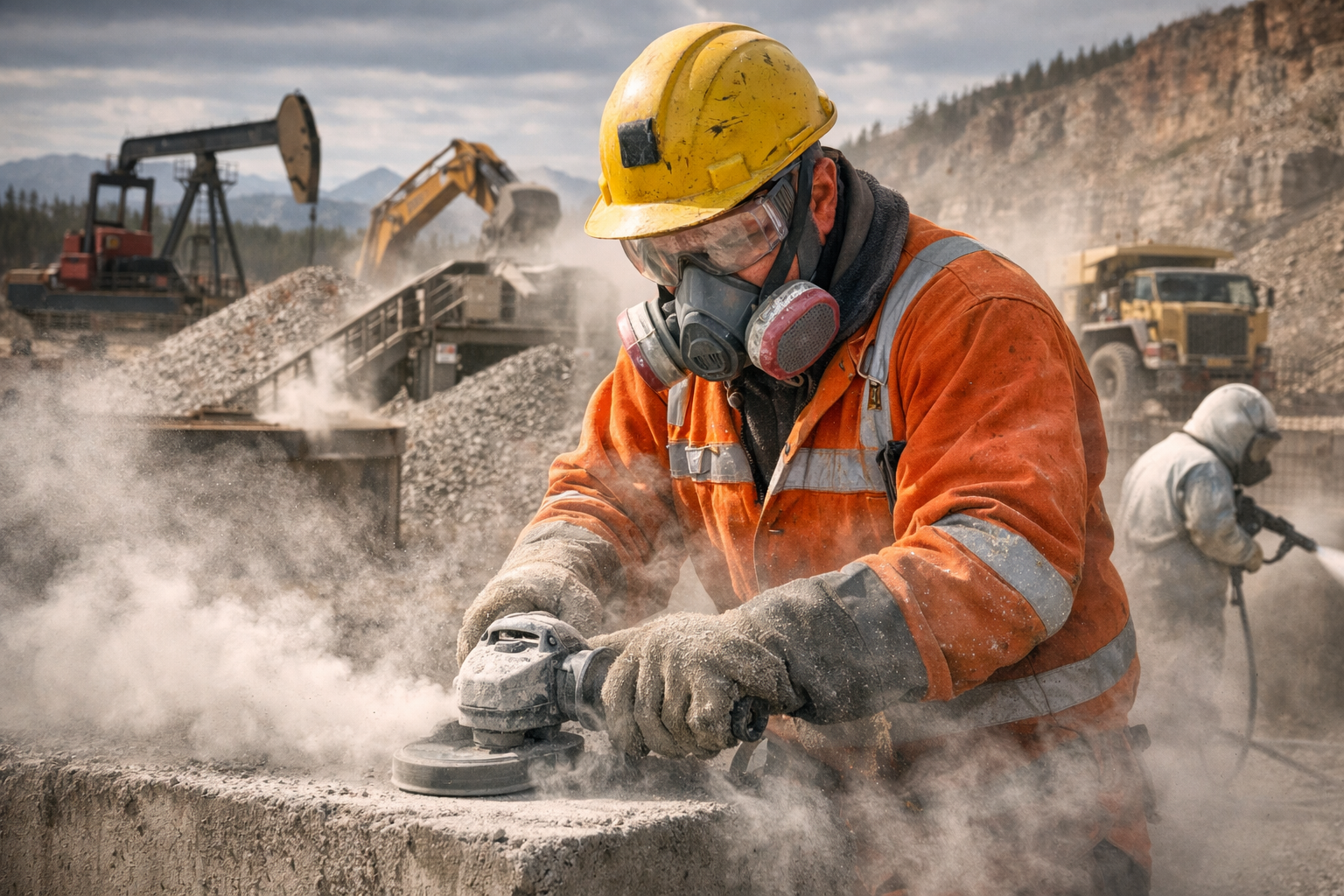
    Construction remains Alberta’s largest source of silica exposure, but the nature of the risk has changed. Dry cutting, grinding, drilling, and demolition of concrete produce intense, short‑duration exposure peaks that often exceed occupational limits — even when average exposures appear low.

    Indoor renovation work is especially problematic. Without proper ventilation, dust accumulates quickly, exposing workers, subcontractors, and building occupants.

    Employer takeaway: Visible dust is not a reliable indicator of risk. Only exposure monitoring can confirm compliance.

    2. Engineered Stone Fabrication: Alberta’s Emerging Silicosis Hotspot

    Engineered stone contains 70–95% crystalline silica, and Alberta’s countertop industry has expanded rapidly. Shops relying on dry cutting or inadequate ventilation are seeing exposures 10–20 times higher than traditional stone fabrication.

    Australia has already banned engineered stone due to clusters of accelerated silicosis in young workers. Alberta is watching closely.

    Why employers must act: This industry is under increasing scrutiny, and proactive controls — wet methods, LEV, housekeeping — are essential.

    3. Oil & Gas: Silica Beyond Frac Sand

    Silica exposure in Alberta’s oil and gas sector is no longer limited to frac crews. Common high‑risk tasks include:

    • Frac sand transfer and handling
    • Sand hauling and unloading
    • Tank cleaning and vessel entry
    • Refractory removal
    • Dusty lease roads

    Maintenance contractors, welders, and turnaround teams are increasingly exposed — often without realizing it.

    Employer takeaway: Silica is now a multi‑trade hazard in oil and gas, not just a frac issue.

    4. Manufacturing & Fabrication: Ultrafine Silica in Welding Fume

    High‑heat processes can generate ultrafine silica particles from fluxes, coatings, and contaminated surfaces. These nanoparticles penetrate deeper into the lungs, cause more oxidative stress, and behave differently than traditional dust.

    This is cutting‑edge science — and a major blind spot for many Alberta employers.

    Why this matters: Welding fume containing silica is more toxic than previously understood. PNOR sampling alone may not capture the full risk.

    5. Mining & Aggregates: Alberta’s Traditional Silica Sector

    Crushing, screening, and hauling aggregate produce massive dust loads. Even with controls, exposures spike during:

    • Crusher cleanouts
    • Belt changes
    • Equipment maintenance
    • Winter operations (frozen material → more breakage → more dust)

    Many operations still rely on “visible dust” as a proxy for risk — a dangerous misconception.

    Employer takeaway: Regular monitoring and engineered controls are essential, especially during maintenance tasks.

    6. Sandblasting & Surface Preparation: Extreme Exposure Potential

    Silica sand is still used in some blasting operations despite safer alternatives. Exposures can exceed occupational limits by 50–100 times without proper controls.

    The hidden risk: bystander exposure. Adjacent trades, cleaners, and maintenance staff often receive significant secondary exposure.

    Why employers must act: Alberta regulators expect blasting operations to demonstrate strict control — including containment, ventilation, and PPE.

    7. Industrial Cleaning & Facility Maintenance

    Sweeping, vacuuming, and cleaning dusty industrial environments can resuspend silica particles. Maintenance workers often experience higher exposures than production staff, especially during:

    • Shutdowns
    • Turnarounds
    • Deep cleaning
    • Equipment tear‑downs

    Employer takeaway: Maintenance teams need the same level of protection as primary workers — often more.

    Why Employers Must Act Now

    1. Alberta’s regulatory expectations are tightening

    The province has moved toward stricter limits aligned with the ACGIH TLV of 0.025 mg/m³. Enforcement is increasing in high‑risk industries.

    2. Silica is now recognized as a whole‑body toxin

    Beyond silicosis, silica is linked to:

    • Autoimmune disease
    • Kidney damage
    • Lung cancer
    • Cardiovascular inflammation

    This expands employer responsibility for long‑term health protection.

    3. Young workers are developing accelerated disease

    Engineered stone fabrication has produced cases of severe silicosis in workers in their 20s and 30s.

    4. Controls are often inadequate or outdated Dry cutting, poor ventilation, and ineffective housekeeping remain common across Alberta.

    What Alberta Employers Should Do Next

    • Conduct exposure monitoring — the only reliable way to confirm compliance
    • Implement engineered controls — wet methods, LEV, HEPA vacuums
    • Improve housekeeping — eliminate dry sweeping
    • Train workers — silica is not “just dust”
    • Review medical surveillance requirements
    • Audit high‑risk tasks — especially maintenance and short‑duration work

    Final Word: Silica Is Preventable — But Only If Employers Take It Seriously

    Silica remains one of Alberta’s most persistent occupational hazards, but it is also one of the most controllable. With proper monitoring, engineering controls, and worker training, employers can dramatically reduce risk — and protect workers from life‑changing disease.

  • What an Indoor Air Quality (IAQ) Inspection Actually Includes

    What an Indoor Air Quality (IAQ) Inspection Actually Includes

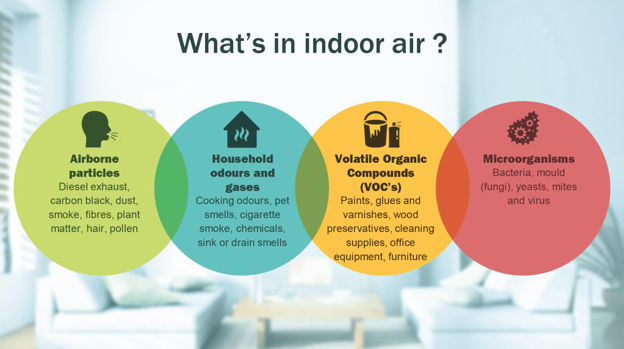
    Indoor Air Quality (IAQ) problems rarely appear overnight. Most issues develop quietly over time — often weeks or months before occupants begin reporting headaches, odours, moisture concerns, or general discomfort. A professional IAQ inspection identifies the root cause of these problems and provides a clear plan to correct them.

    This guide explains what an IAQ assessment includes, why each step matters, and how building owners in Alberta can use IAQ inspections to improve health, comfort, and regulatory compliance.

    1. Building History & Occupant Interviews
      Understanding the building’s history is essential for diagnosing IAQ issues. During an inspection, I review:
      • Renovation or construction timelines
      • Seasonal changes affecting HVAC performance
      • Water intrusion or moisture events
      • Changes in occupancy or operations
      • Patterns in occupant symptoms
      Occupant interviews often reveal clues that aren’t visible during a walkthrough — such as symptoms that worsen at certain times of day or in specific rooms.
    2. Detailed Visual Inspection

    A visual inspection is the foundation of every IAQ assessment. This step identifies early warning signs of:

    • Moisture intrusion
    • Mold growth or staining
    • Blocked or damaged ventilation components
    • Poor housekeeping affecting airflow
    • Chemical storage issues
    • Damaged insulation or filters

    Most IAQ problems can be traced back to something visible — if you know what to look for.

    3. Ventilation & Airflow Assessment

    Ventilation issues are among the most common IAQ problems in Alberta buildings. During an inspection, I measure:

    • Outdoor air supply
    • Exhaust system performance
    • Pressure relationships between rooms
    • Airflow distribution
    • HVAC system functionality

    Poor ventilation leads to elevated CO₂, odours, discomfort, and increased contaminant buildup — especially in tightly sealed buildings.

    4. Air Sampling (If needed)

    Air sampling is targeted, not generic. It’s used to confirm observations or quantify concerns. Depending on the situation, sampling may include:

    • Mold spores
    • VOCs (volatile organic compounds)
    • Carbon dioxide
    • Carbon monoxide
    • Particulates (PM2.5, PM10)
    • Temperature and humidity

    Sampling answers specific questions — it should never be the first step.

    5. Reporting & Recommendations

    A professional IAQ report includes:

    • Clear findings
    • Root cause analysis
    • Corrective actions
    • Preventive measures
    • Photos and data
    • Regulatory or guideline references

    The goal is to give building owners a practical roadmap, not just a list of problems.

    Why IAQ Inspections Matter

    A well‑executed IAQ inspection:

    • Reduces occupant complaints
    • Prevents moisture and mold issues
    • Improves HVAC performance
    • Supports regulatory compliance
    • Protects health and productivity
    • Saves money by addressing issues early

    IAQ problems rarely resolve on their own. They require a systematic, evidence‑based approach — and that’s exactly what a professional inspection provides.

  • Small Wins, Big Changes: How Everyday Conversations Transform Workplace Health & Safety

    Small Wins, Big Changes: How Everyday Conversations Transform Workplace Health & Safety

    In more than 30 years of industrial hygiene and workplace health & safety consulting, one truth has stood out above all others: lasting safety culture doesn’t come from big initiatives — it comes from small wins.

    Not new policies.
    Not new posters.
    Not new training modules.

    Real, measurable change begins with something far simpler:
    a conversation, a follow‑up, a moment of listening, or a small action that shows employees their voice matters.

    These small wins accumulate. They build trust. And over time, they reshape behaviours in ways that no top‑down directive ever could.

    Why Small Wins Matter in Health & Safety
    In the safety world, we often focus on the big picture — reducing incidents, improving compliance, meeting regulatory requirements, and managing risk. But the foundation of all of these outcomes is human behaviour, and human behaviour changes slowly, subtly, and through repeated positive reinforcement.

    Small wins work because they:

    Build psychological safety — employees feel safe speaking up

    Reduce resistance — small steps feel achievable

    Create momentum — success encourages more success

    Strengthen trust — workers see that concerns lead to action

    Improve communication — conversations become normal, not reactive

    When workers feel heard, they participate.
    When they participate, they take ownership.
    And when they take ownership, safety culture transforms.

    The Compounding Effect: How Small Wins Become Big Changes
    Think of small wins as deposits in a trust account.
    Each one seems minor on its own, but over time, the balance grows — and so does the willingness of employees to engage.

    Here’s what I’ve consistently seen across worksites:

    A worker who once stayed silent begins reporting hazards

    A supervisor starts checking in more consistently

    Teams begin discussing safety proactively instead of reactively

    Housekeeping improves without reminders

    PPE compliance becomes self‑policed

    Safety meetings shift from lectures to conversations

    None of these changes happen overnight.
    They happen because small wins accumulate until they become culture.

    Examples of Small Wins That Create Big Shifts
    Here are the kinds of small actions that have the biggest long‑term impact:

    Following up on a concern — even if the answer is “we’re still working on it”

    Explaining monitoring results in plain language

    Asking workers for their perspective before making recommendations

    Acknowledging effort when someone improves a task or area

    Making one small improvement visible (e.g., fixing a ventilation issue quickly)

    Checking in regularly instead of only during audits or incidents

    These actions show employees that safety is not a box to check — it’s a relationship.

    Why This Approach Works Better Than Top‑Down Enforcement
    Traditional safety programs often rely on:

    Rules

    Policies

    Disciplinary action

    Compliance pressure

    These tools have their place, but they don’t create engagement.
    They create avoidance.

    Small wins, on the other hand, create ownership.
    Ownership leads to behaviour change.
    Behaviour change leads to culture change.

    And culture change is what reduces incidents long‑term.

    How Leaders Can Start Creating Small Wins Today

    Here are simple, high‑impact actions leaders can take immediately:

    • Walk the floor and ask one question: “What’s one thing that would make your job safer or easier?”
    • Follow up on every concern, even if the update is small
    • Share monitoring results in a way that workers understand
    • Recognize improvements publicly
    • Invite workers to participate in solutions, not just problems
    • Model the behaviour you want to see

    These actions cost nothing — but they change everything.

    Final Thought: Start Small, Start Human
    If you want big changes in safety culture, don’t start big.
    Start small.
    Start consistent.
    Start human.

    In my experience, the most powerful safety improvements I’ve ever seen didn’t begin with a policy — they began with a conversation.

  • The Hidden Costs of Poor Housekeeping in the Workplace

    The Hidden Costs of Poor Housekeeping in the Workplace

    Poor housekeeping isn’t about messy desks.
    It’s about the quiet, creeping risks that build up when a workplace stops paying attention to the basics—cleanliness, order, flow, and safety. As an Industrial Hygienist, I’ve seen how “just a bit of clutter” can turn into real hazards that affect productivity, morale, and even long‑term health.

    And the truth is this: housekeeping is one of the most underestimated controls in occupational health.

    Why Housekeeping Matters More Than People Think

    Most people picture housekeeping as tidying up. But in the world of industrial hygiene and occupational health, it’s much broader:

    Slip and trip hazards — cords, hoses, tools, debris, uneven surfaces

    Airborne contaminants — dust accumulation, poor ventilation, blocked air intakes

    Fire risks — oily rags, combustible dust, cluttered exits

    Ergonomic strain — awkward storage, overloaded shelves, poor layout

    Chemical exposure — improper storage, unlabeled containers

    Biological hazards — mould growth, water intrusion, poor sanitation

    Housekeeping is not cosmetic.
    It’s preventative safety, risk reduction, and respect for the people doing the work.

    How Poor Housekeeping Shows Up on Real Worksites

    After 34 years in this field, patterns emerge. Poor housekeeping often reveals deeper issues:

    Production pressure overriding safety

    Lack of ownership—no one assigned to maintain order

    Cultural drift—“we’ve always done it this way”

    Aging facilities with no maintenance plan

    Inadequate training on why housekeeping matters

    When I walk onto a site, I can usually tell within 30 seconds whether the organization values safety. Housekeeping is the first indicator.

    Good Housekeeping Is a Control Measure—Not an Afterthought

    In the hierarchy of controls, housekeeping supports:

    Engineering controls (clear airflow, unobstructed equipment)

    Administrative controls (organized workflow, safe access)

    PPE effectiveness (less dust, fewer contaminants)

    It’s the foundation that makes every other control work better.

    The Human Side: Housekeeping as Respect

    • We respect your time and effort
    • We want you to go home healthy

    Workers feel the difference. Clients feel the difference. And the work itself improves.

    Practical Steps to Improve Housekeeping Today
    Each item below is a Guided Link so you can expand it into its own blog post later.

    Define ownership — every area needs a responsible person

    Create flow paths — eliminate bottlenecks and blind corners

    Improve storage — labelled, accessible, ergonomic

    Control dust — ventilation, HEPA vacuums, routine cleaning

    Manage waste — scheduled removal, proper containers

    Inspect regularly — short, frequent, consistent

    Train workers — not just what to do, but why

  • The Hidden Value of Professional Industrial Hygiene: Why Expertise Still Matters

    The Hidden Value of Professional Industrial Hygiene: Why Expertise Still Matters

    In a world where businesses are moving faster than ever, it’s easy for health and safety decisions to become transactional. A quick quote. A quick visit. A quick report. But when it comes to protecting workers, preventing liability, and ensuring long‑term operational stability, professional industrial hygiene is not a commodity — it’s a strategic advantage.

    For over 34 years, I’ve seen the same pattern repeat itself across Calgary and Western Canada: companies that invest in proper industrial hygiene assessments experience fewer disruptions, fewer complaints, and fewer costly surprises. The reason is simple — good data leads to good decisions.

    Why Industrial Hygiene Expertise Still Matters
    Many organizations underestimate the complexity of indoor air quality, noise exposure, chemical hazards, and ventilation performance. These issues are often invisible until they become urgent. A professional assessment provides:

    Accurate measurements, not assumptions

    Clear interpretation of regulatory requirements

    Actionable recommendations tailored to your facility

    Documentation that stands up to scrutiny during disputes or inspections

    This is where experience matters. A seasoned consultant doesn’t just measure — they interpret, anticipate, and prevent.

    The Cost of “Quick and Cheap” Assessments
    Cut‑rate assessments often skip critical steps:

    No baseline data

    No root‑cause analysis

    No follow‑up

    No defensible documentation

    These shortcuts can lead to misdiagnosis, recurring complaints, and unnecessary expenses. In contrast, a proper industrial hygiene evaluation provides clarity, confidence, and long‑term value.

    A Relationship‑Driven Approach
    My consulting philosophy has always been simple:
    Serve people, not transactions.

    That means:

    Taking the time to understand the facility

    Explaining findings in plain language

    Providing ongoing support

    Being available when clients need clarity or reassurance

    This relationship‑driven model is why many of my clients have stayed with me for decades.

    Why This Matters for Calgary Businesses

    Calgary’s industrial, commercial, and residential environments are evolving. New buildings, new materials, new ventilation systems, and new work patterns all introduce new risks. Companies need reliable, experienced guidance — not guesswork.

    Whether it’s a noise dispute, an IAQ complaint, or a proactive assessment, professional industrial hygiene protects your people, your reputation, and your bottom line.