Forest fires are no longer rare, seasonal events—they’re becoming a year round environmental and public health challenge across North America. As fires intensify, the smoke they generate travels hundreds or even thousands of kilometres, affecting communities far from the flames. Understanding how wildfire smoke impacts air quality—and how to read the Air Quality Index (AQI)—is essential for protecting employee health, maintaining business continuity, and supporting community resilience.
How Forest Fires Affect Air Quality
When forests burn, they release a complex mixture of gases and fine particles. The most harmful pollutant is PM2.5—microscopic particles small enough to penetrate deep into the lungs and even enter the bloodstream. These particles are responsible for the majority of health impacts during smoke events.
Key pollutants released during wildfires:
• PM2.5 — fine particulate matter that drives AQI levels
• Carbon monoxide — reduces oxygen delivery in the body
• Volatile organic compounds (VOCs) — can irritate eyes, nose, and throat
• Nitrogen oxides — contribute to smog formation
Even communities far from the fire zone can experience hazardous air quality as smoke travels across provinces and states. Satellite systems like NOAA’s Hazard Mapping System track smoke plumes that may be miles above the ground—meaning visible haze doesn’t always match ground level pollution.
Understanding the Air Quality Index (AQI)
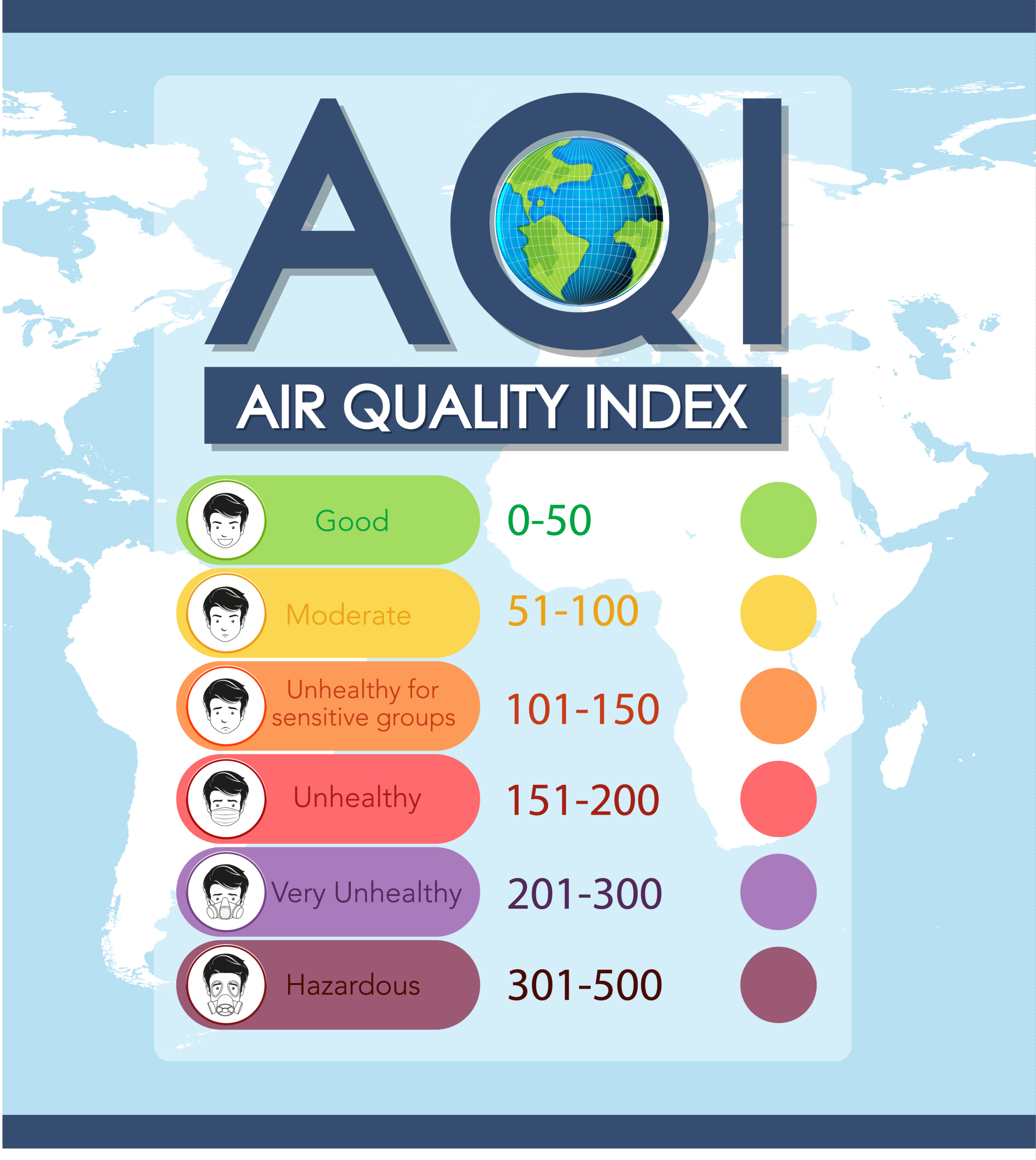
The Air Quality Index (AQI) is a standardized scale used across Canada and the U.S. to communicate how clean or polluted the air is. It converts complex pollutant measurements—primarily PM2.5 during wildfire events—into a simple number from 0 to 500. Higher numbers mean greater health risks.
AQI Categories & What They Mean
• 0–50 (Good) — Air quality poses little or no risk.
• 51–100 (Moderate) — Acceptable; sensitive individuals may notice mild symptoms.
• 101–150 (Unhealthy for Sensitive Groups) — Children, older adults, and people with heart/lung conditions should limit outdoor exertion.
• 151–200 (Unhealthy) — Everyone may experience symptoms; move activities indoors.
• 201–300 (Very Unhealthy) — Health alert; avoid outdoor activity.
• 301–500 (Hazardous) — Emergency conditions; serious health effects for everyone.
Where to check AQI:
• AirNow (U.S.) — real time AQI and smoke maps
• IQAir — global AQI rankings and local readings
• Local provincial/state environmental agencies
• PurpleAir sensors — community based real time PM2.5 data
How AQI helps you plan:
AQI forecasts predict 24 hour average pollution levels, helping businesses decide when to:
• Shift outdoor work indoors
• Adjust employee schedules
• Reduce strenuous outdoor activities
• Communicate health guidance to staff and clients
Why This Matters for Businesses
Wildfire smoke affects more than health—it impacts productivity, operations, and customer experience.
Business impacts include:
• Increased employee sick days
• Reduced outdoor work capacity
• Lower visibility for transportation and logistics
• Indoor air quality challenges
• Customer traffic declines during heavy smoke events
Action steps for employers:
• Install HEPA or high MERV air filtration
• Provide N95 masks during smoke events (cloth masks do not filter PM2.5)
• Monitor AQI daily and adjust operations accordingly
• Communicate clearly with staff and clients
• Create a wildfire smoke response plan
Final Thoughts
Forest fires are reshaping how communities and businesses think about air quality. By understanding AQI and monitoring wildfire smoke, organizations can protect their teams, maintain operations, and contribute to a healthier, more resilient community.