
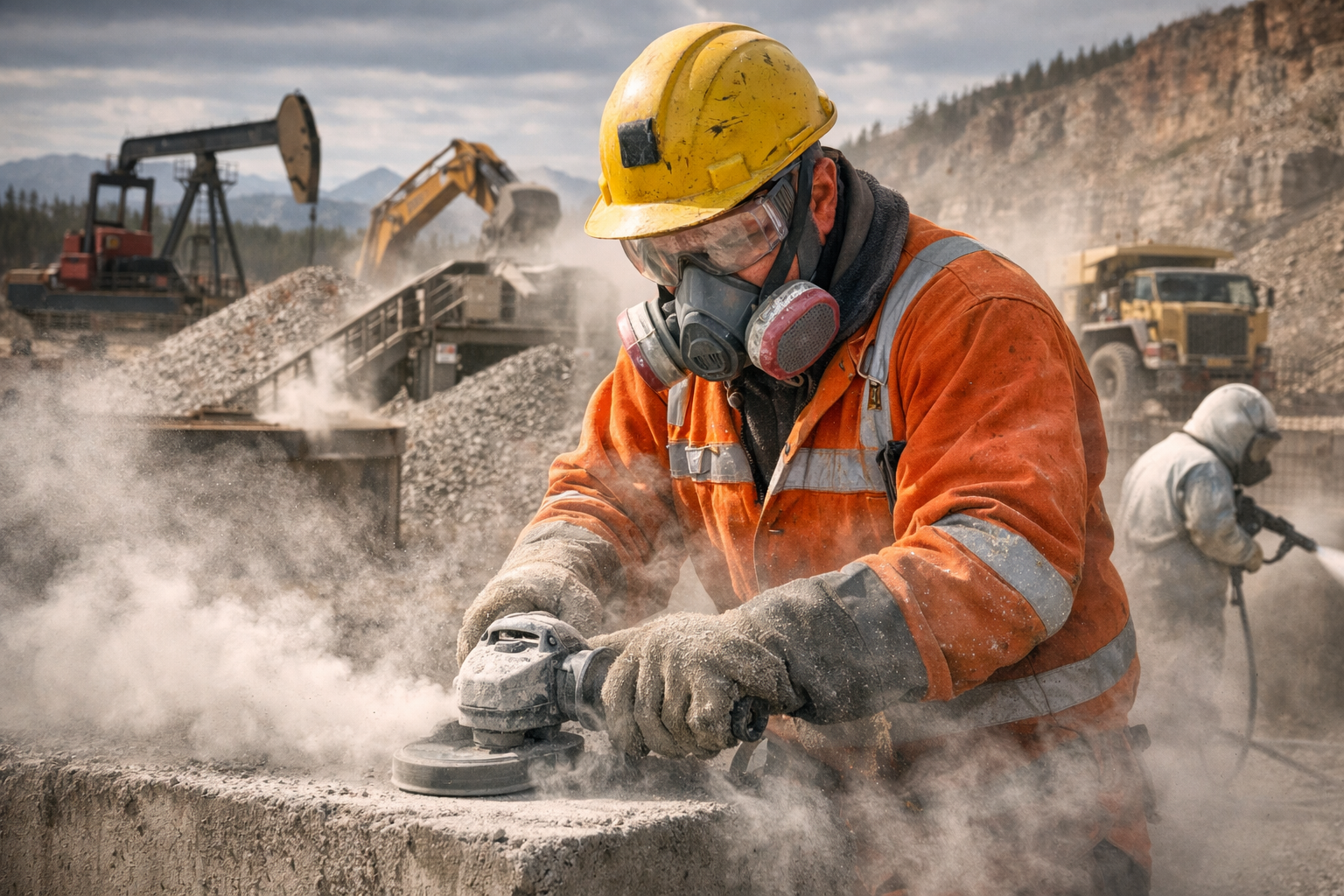
Silica: Alberta’s Most Persistent — and Most Misunderstood Workplace Hazard
Crystalline silica has long been part of Alberta’s industrial landscape, but the risk profile has shifted dramatically. New materials, new work practices, and new scientific evidence have transformed silica from a “traditional construction dust” into a whole body occupational toxin linked to lung disease, autoimmune disorders, kidney damage, and even cardiovascular impacts.
Across the province, exposures are rising in sectors that historically received little attention. At the same time, regulatory expectations are tightening, and employers are being asked to demonstrate real, measurable control of silica hazards.
This article outlines the seven Alberta industries where silica exposure is most significant today — and why employers must act now.
1. Construction & Demolition: Short‑Duration, High‑Intensity Exposures
Construction remains Alberta’s largest source of silica exposure, but the nature of the risk has changed. Dry cutting, grinding, drilling, and demolition of concrete produce intense, short‑duration exposure peaks that often exceed occupational limits — even when average exposures appear low.
Indoor renovation work is especially problematic. Without proper ventilation, dust accumulates quickly, exposing workers, subcontractors, and building occupants.
Employer takeaway: Visible dust is not a reliable indicator of risk. Only exposure monitoring can confirm compliance.
2. Engineered Stone Fabrication: Alberta’s Emerging Silicosis Hotspot
Engineered stone contains 70–95% crystalline silica, and Alberta’s countertop industry has expanded rapidly. Shops relying on dry cutting or inadequate ventilation are seeing exposures 10–20 times higher than traditional stone fabrication.
Australia has already banned engineered stone due to clusters of accelerated silicosis in young workers. Alberta is watching closely.
Why employers must act: This industry is under increasing scrutiny, and proactive controls — wet methods, LEV, housekeeping — are essential.
3. Oil & Gas: Silica Beyond Frac Sand
Silica exposure in Alberta’s oil and gas sector is no longer limited to frac crews. Common high‑risk tasks include:
- Frac sand transfer and handling
- Sand hauling and unloading
- Tank cleaning and vessel entry
- Refractory removal
- Dusty lease roads
Maintenance contractors, welders, and turnaround teams are increasingly exposed — often without realizing it.
Employer takeaway: Silica is now a multi‑trade hazard in oil and gas, not just a frac issue.
4. Manufacturing & Fabrication: Ultrafine Silica in Welding Fume
High‑heat processes can generate ultrafine silica particles from fluxes, coatings, and contaminated surfaces. These nanoparticles penetrate deeper into the lungs, cause more oxidative stress, and behave differently than traditional dust.
This is cutting‑edge science — and a major blind spot for many Alberta employers.
Why this matters: Welding fume containing silica is more toxic than previously understood. PNOR sampling alone may not capture the full risk.
5. Mining & Aggregates: Alberta’s Traditional Silica Sector
Crushing, screening, and hauling aggregate produce massive dust loads. Even with controls, exposures spike during:
- Crusher cleanouts
- Belt changes
- Equipment maintenance
- Winter operations (frozen material → more breakage → more dust)
Many operations still rely on “visible dust” as a proxy for risk — a dangerous misconception.
Employer takeaway: Regular monitoring and engineered controls are essential, especially during maintenance tasks.
6. Sandblasting & Surface Preparation: Extreme Exposure Potential
Silica sand is still used in some blasting operations despite safer alternatives. Exposures can exceed occupational limits by 50–100 times without proper controls.
The hidden risk: bystander exposure. Adjacent trades, cleaners, and maintenance staff often receive significant secondary exposure.
Why employers must act: Alberta regulators expect blasting operations to demonstrate strict control — including containment, ventilation, and PPE.
7. Industrial Cleaning & Facility Maintenance
Sweeping, vacuuming, and cleaning dusty industrial environments can resuspend silica particles. Maintenance workers often experience higher exposures than production staff, especially during:
- Shutdowns
- Turnarounds
- Deep cleaning
- Equipment tear‑downs
Employer takeaway: Maintenance teams need the same level of protection as primary workers — often more.
Why Employers Must Act Now
1. Alberta’s regulatory expectations are tightening
The province has moved toward stricter limits aligned with the ACGIH TLV of 0.025 mg/m³. Enforcement is increasing in high‑risk industries.
2. Silica is now recognized as a whole‑body toxin
Beyond silicosis, silica is linked to:
- Autoimmune disease
- Kidney damage
- Lung cancer
- Cardiovascular inflammation
This expands employer responsibility for long‑term health protection.
3. Young workers are developing accelerated disease
Engineered stone fabrication has produced cases of severe silicosis in workers in their 20s and 30s.
4. Controls are often inadequate or outdated Dry cutting, poor ventilation, and ineffective housekeeping remain common across Alberta.
What Alberta Employers Should Do Next
- Conduct exposure monitoring — the only reliable way to confirm compliance
- Implement engineered controls — wet methods, LEV, HEPA vacuums
- Improve housekeeping — eliminate dry sweeping
- Train workers — silica is not “just dust”
- Review medical surveillance requirements
- Audit high‑risk tasks — especially maintenance and short‑duration work
Final Word: Silica Is Preventable — But Only If Employers Take It Seriously
Silica remains one of Alberta’s most persistent occupational hazards, but it is also one of the most controllable. With proper monitoring, engineering controls, and worker training, employers can dramatically reduce risk — and protect workers from life‑changing disease.